Asteria Colored Diamonds

Asteria Colored Diamonds

TechForm

TechForm Platinum Jewelry Casting

Leibish & Co

Monday, November 5, 2012

Georg Jensen Acquired by Investment Group for $140 Million

Georg Jensen Fusion Rings

Investcorp, a group that invests in what it calls “alternative products,” said Monday that it has signed a definitive agreement to acquire Danish luxury silver brand, Georg Jensen, for $140 million from private equity group Axcel Capital Partners.

With the sale comes a change in key personnel. David Chu, founder of Nautica, will join the company on closing as chief creative director and co-chairman of the Investcorp board. Also joining the board on closing will be Guy Leymarie, former CEO of DeBeers Diamond Jewellers, Cartier International and Dunhill.

Georg Jensen is a global luxury brand that designs, manufactures and distributes silver jewelry, watches, fine silverware and high-end housewares. With a history that spans more than 100 years, the Georg Jensen brand has a deep heritage in fine silver goods and represents quality craftsmanship and timeless designs.

“We are pleased to be entrusted with taking Scandinavia's preeminent luxury brand to a global level. We believe that in partnership with the current solid management team, said Hazem Ben-Gacem, head of Investcorp's European corporate investments activities. “Georg Jensen stands to become one of the leading hard luxury brands in the 21st Century.”

Georg Jensen was founded by the eponymous Danish designer in 1904. Today the business has 94 fully owned stores and three franchised stores around the world. The vertically integrated company has approximately 1,200 employees worldwide. In 2011, the company had sales of approximately $160 million. Georg Jensen is part of the Royal Scandinavia Group, which was bought by Axcel in 2001.
 

Please join me on the Jewelry News Network Facebook Page, on Twitter @JewelryNewsNet and on the Forbes Web site.

Sunday, November 4, 2012

Montblanc’s Villeret Luxury Watches Keep The Minerva Soul

The home of traditional Swiss watch company now owned by luxury brand, Montblanc. Photo credit: Anthony DeMarco

VILLERET, Switzerland — In the Swiss watch industry, it could be said that the more things change the more they stay the same. This is particularly true for the watch company known today as “Montblanc Manufacture in Villeret.”

The company was founded in 1858 as the H. & C. Robert watchmaking factory by brothers Charles-Yvan and Hyppolite Robert inside the family house in this picturesque village on the edge of the Jura mountains. The company took on the Minerva name in 1923 and kept it for 84 years. 


Some of the components that make up a watch movement. All pieces are made in house in the Swiss watchmaking tradition. Photo credit: Anthony DeMarco

Almost from the beginning the company, which moved from its residential workshop to a true manufacturing facility across the street in 1887, produced in-house movements, particularly its chronographs that were so accurate and efficient they were used in the battlefields of World War I and II and to keep time for the events of the 1936 Winter Olympics. It was one of the first companies to produce a chronograph pocket watch, one of the first to produce movements for wristwatches, and one of the first to build a chronograph that could track hundredths of a second. The company also produced chronographs and classic watches for the general public. Needless to say the brand’s heritage and quality of their movements produced a loyal following.

A watchmaker creates one of the individual components of a movement. Photo credit: Anthony DeMarco

The company’s biggest change happened in 2000 when Italian investor Emilio Gnutti purchased it and changed its mission to produce haute horlogerie timepieces in-house using the same hand-made techniques and the philosophy of the brand. The new owner brought in Demetrio Cabiddu as its technical director. Then a change of seismic proportions happened in 2006 when luxury goods conglomerate, Compagnie Financière Richemont, purchased the company and from my understanding assigned the watch manufacturer to Montblanc—one of the many luxury brands it owns.

The balance spring (also known as a hairspring) is attached to the balance wheel to control the speed at which the wheels of the timepiece turn, and thus the rate of movement of the hands. These items are hand-made inside the factory. Photo credit: Anthony DeMarco

In the new atrium on the top floor of the historic manufacturing facility, Cabiddu, who is extremely passionate and protective of the company’s heritage, said he had some sleepless nights wondering what Montblanc, which was new to the staunchly traditional Swiss watch industry, was going to do with the company and its heritage. 

A skilled watchmaker attaches the balance spring to the balance wheel and then sets it over a timing device with a reference balance. She checks the difference in beats and bends the spring until they match.  Photo credit: Anthony DeMarco

“Of course I was very worried, I was scared,” Cabiddu said in French through a translator. “There was a need to preserve the heritage and credibility of Minerva and this 150 years of expertise.” He added, “People who don’t have fear are people who don’t have a conscience.” 

Some of the older equipment in the factory includes this large stamping machine. Photo credit: Anthony DeMarco

It turned out that there was no need to fear. Montblanc, the German company with its own 106-year history as a manufacturer of luxury writing instruments, not only bought into the legacy of Minvera, but in some cases expanded upon it. 

Another example of the early equipment that is still being used in the Villeret factory is this vertical drill. Photo credit: Anthony DeMarco

In fact, Montblanc’s inexperience in the Swiss watch industry “turned out to be an advantage,” Cabiddu said. “Montblanc trusted us. In hindsight it turned out to be the best choice.” 

Before Montblanc took control of the company, it was known for 84 years as Minerva. The toolboxes still carry the name and according to technical director, Demetrio Cabiddu, still maintains the Minerva heritage. Photo credit: Anthony DeMarco

There were some changes. Most obvious was the name change to reflect the location of the company. “Losing the name was a solution I had to take,” Cabiddu said. “Today I laugh about it a lot more. I used to cringe (when hearing the new name). In hindsight it was probably the right thing to do as we move into the future.” 

Two persons are dedicated to working with clients all over the world to create hand-drawn models of bespoke watches they would like to own. Photo credit: Anthony DeMarco

Montblanc also renovated the manufacturing facility. However, restoration is a better way to describe the work. Apart from the new, modern atrium with a view of the countryside, a fresh coat of paint and some structural repairs, little appears to have changed. 

Montblanc Collection Villeret 1858 Vintage Tachydate

Montblanc renamed the building the “Institut Minerva de Recherche en Haute Horlogerie,” and created a foundation under the same name, which Montblanc said in a statement is, “dedicated to classical fine watchmaking and the upholding of traditional skills and special complications,” adding that it “supports young watchmakers through internships, commissioning research on the history of traditional watchmaking and initiates new developments with traditional techniques in watchmaking.”

Montblanc Collection Villeret 1858 Tourbillon Bi-Cylindrique

It isn’t clear to me how this institute or foundation operates. What is clear is that it hasn’t changed the focus of the company. Villeret is a watch manufacturer that employs 36 full-time workers and four consultants and produces between 200 and 250 limited-edition hand-made timepieces per year, Cabiddu said. Everything is done in house with the exception of the dials, hands, straps and cases. 

Montblanc Collection Villeret 1858 Régulateur Nautique Timepiece

Large stamping machines and vertical drills that date back approximately 80 years share the building with modern CNC and CAD equipment. Some machines are so old parts aren’t available anymore so watchmakers have to hand-build the parts and even the tools to repair the equipment. The company produces chronographs, tourbillons and classic watch lines. In addition, it creates bespoke timepieces for private clients. Two designers are dedicated to creating hand-drawings of the timepieces based on specifications of these collectors. 

The company was founded in 1858 as the as the H. & C. Robert watchmaking factory by brothers Charles-Yvan and Hyppolite Robert in the house across the street from the current manufacturing facility. Photo credit: Anthony DeMarco

With its trademarked V-shaped bridge and a small arrow, the highly polished movements were always a site to behold. However, the outside of the watches were traditional and one dimensional. Montblanc added variety to the overall appearance of the timepieces, Cabiddu said.

The company, formerly called Minerva, was known for its chronograph movements. Here is some the company's earlier chronograph pocket watches. Photo credit: Anthony DeMarco

“Our movements were always beautiful,” he said. “Montblanc added a diversification of the aesthetic.” 

The company still does repair work on antique watches that were built prior to Montblanc's ownership of the brand. Photo credit: Anthony DeMarco

But still he describes the timepieces they make as “understated luxury,” and added that Montblanc’s own history shows that it respects and enhances this philosophy. “Montblanc is not really big with being in your face.” 


This philosophy of beauty could certainly describe the town that now shares the company’s name. Very little seems to have changed in the countryside outside the building, yet its prosperity shows that it is able to adjust to changes in the world while maintaining its heritage. Looking out from the atrium just across the street is the yellow-colored house where the watch company was founded more than 150 years ago, now occupied by a new family. Beyond the house cows graze on a sheet of green. Past the meadow are the Jura mountains covered with the flaming reds, oranges and yellows that represent the leaves of autumn on this late October day. If that’s not enough, above the cliffs in the powder blue late afternoon sky is a crescent moon.

It’s a scene that one could easily describe as understated luxury.


Please join me on the Jewelry News Network Facebook Page, on Twitter @JewelryNewsNet and on the Forbes Web site.

Thursday, November 1, 2012

Blue Nile Sales Up 19.8 Percent


Blue Nile said Thursday its net sales increased 19.8%, year-over-year, to $89.8 million for the third quarter due to a increases in all its product categories, including its new focus on fashion jewelry, and a large increase in new customers. However, international sales fell for the period ended September 30.

Operating income for the diamonds and jewelry Internet retailer totaled $2.7 million, representing an operating margin of 3 percent of net sales. Net income totaled $1.7 million, or $0.14 per diluted share. Non-GAAP adjusted EBITDA for the quarter totaled $4.8 million.

"We are excited to report solid results in the third quarter, with accelerating revenue growth and expanding earnings per share, said Harvey Kanter, president and CEO of the Seattle-based company. “The execution of our strategy is clearly on track. Investments we made in marketing and pricing are working and building momentum behind the strength of our diamond engagement products. Sales of our non-engagement products also improved this quarter, and we are only beginning to launch an assortment of new jewelry aimed to further accelerate our growth. With continued steady execution of our strategy coupled with exciting product offerings for the holiday season, we believe we are well positioned to achieve our goals for 2012.”

Among the highlights for the third quarter:

* U.S. engagement net sales increased 31.5 percent to $54.1 million.
    
* U.S. non-engagement net sales (a new focus for the company) increased 12 percent to $21.8 million.
    
* International net sales fell 3.3 percent to $14.4 million for the third quarter 2011. Excluding the impact from changes in foreign exchange rates, international net sales decreased 1.5 percent.
    
* Gross profit totaled $16.9 million. As a percent of net sales, gross profit was 18.8 percent compared to 19.8 percent for the third quarter of 2011.
    
* New customers grew 22.4 percent.  
    
* Selling, general and administrative expenses were $14.3 million, compared to $12 million in the third quarter of 2011.
    
* At the end of the third quarter, cash and cash equivalents totaled $30.2 million.

In its financial guidance, the company said it expects fourth quarter net sales to be between $140 million and $153 million, with earnings per diluted share are projected at $0.44 to $0.50.

For the fiscal year it expects net sales to be between $404 million and $417 million, with earnings per diluted share are projected at $0.70 to $0.75.

Please join me on the Jewelry News Network Facebook Page, on Twitter @JewelryNewsNet and on the Forbes Web site.

Wednesday, October 31, 2012

Shanghai Fair Provides Buying Opportunities for Upcoming Holidays

Jewelry retailers in Asia will have a final opportunity to stock their shelves for the upcoming Christmas holidays and Chinese New Year festivities during the China International Gold, Jewellery & Gem Fair – Shanghai (Shanghai Fair), from November 9 – 12 at the Shanghai World Expo Exhibition and Convention Center.

More than 300 exhibitors from 18 countries and regions will showcase the latest contemporary jewelry, classic bestsellers and trends during the eighth edition of the annual trade fair, organized by UBM Asia.

In 2011, retail sales of consumer goods in Shanghai exceeded RMB677 billions, up 12.3 percent from 2010. Retail sales of gold and jewelry alone grew roughly 25 percent, according to data from the National Bureau of Statistics of China.

Given its November schedule, the Shanghai Fair provides the last-minute opportunity for buyers wanting to add to their inventory for the busy Christmas and Chinese New Year festivities.

Pavilions dedicated to luxury jewelry manufacturers, jadeite manufacturers from Taiwan and gems from Sri Lanka are among the features of the fair.


Please join me on the Jewelry News Network Facebook Page, on Twiitter @JewelryNewsNet and on the Forbes Web site.

‘Pigeon’s Blood’ Ruby Necklace Leads Diverse Christie’s Hong Kong Jewelry Sale

CHRISTIE'S IMAGES LTD. 2011

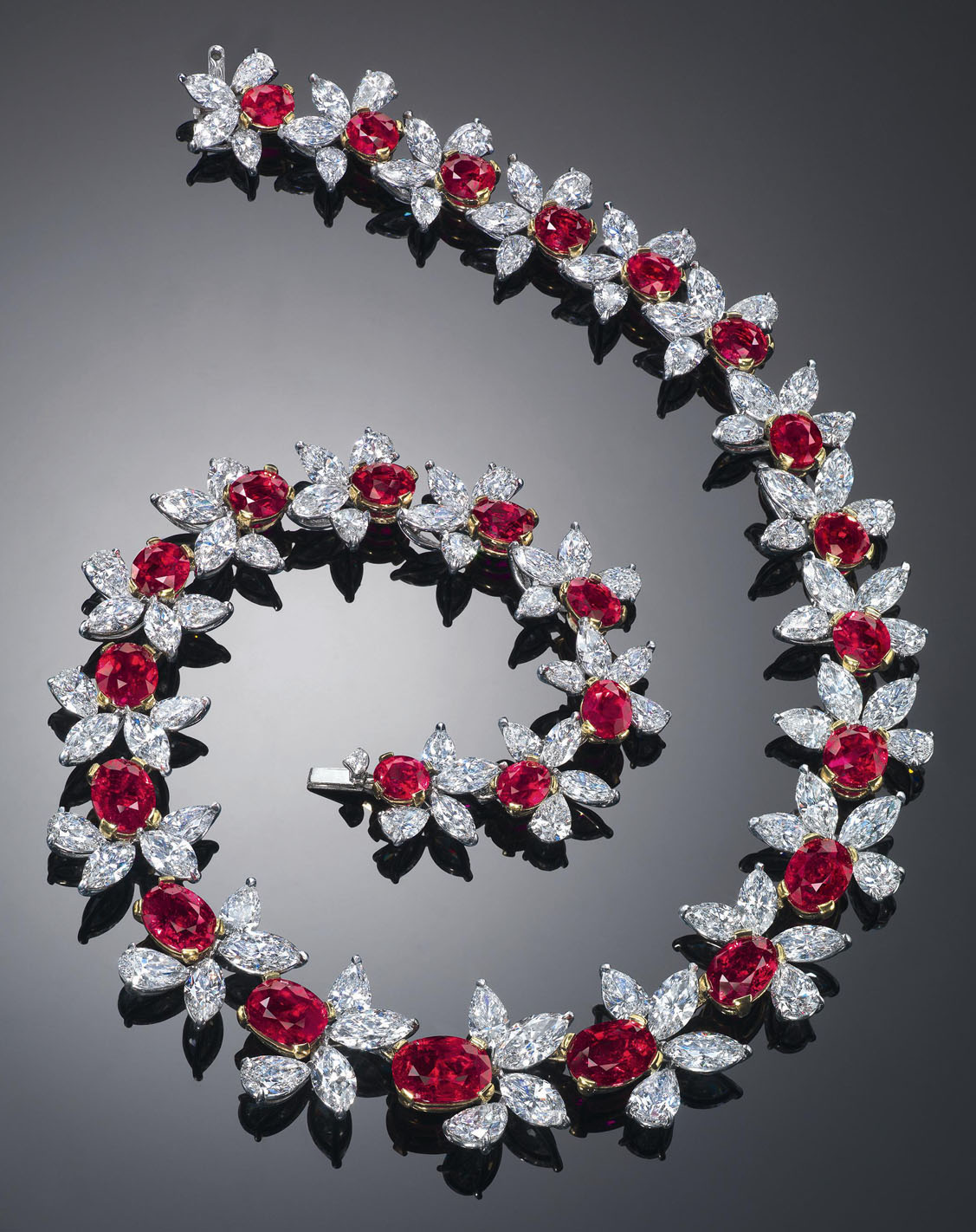
It’s a rare jewelry auction these days where diamonds are not the most prestigious items for sale. This auction will break the trend as leading the sale of Christie’s Hong Kong Magnificent Jewels Autumn sale is a Burmese no heat “pigeon’s blood” ruby and diamond necklace (pictured above) with matching earrings (below) by James W. Currens. The necklace has an auction estimate of $3.5 to $5.5 million; and the earrings have estimate of $2.5 million to $3.5 million.

CHRISTIE'S IMAGES LTD. 2011

Designed as twenty-six graduated oval-shaped rubies weighing between 5.38 and 1.27 carats, each ruby comprising the necklace named, “Red Scarlet” is accented by a cluster of marquise and pear-shaped diamonds, mounted in platinum and 18k yellow gold. The matching pair of earrings are titled the “Red Butterflies” for their shape, and each feature a pair of Burmese rubies over 7 carats. The rubies all come from the Mogok Stone Tract in Upper Burma, which is considered to be the source for the finest quality “pigeon’s blood” rubies, the term used to describe the brightest and most valuable red color for rubies.

More than 300 items will be on sale for the November 27 auction at the Hong Kong Convention & Exhibition Centre. The pre-sale estimate is valued at approximately $70 million. An assortment of diamonds, emeralds and sapphires from the world’s legendary mines, natural seawater pearls, and, being Hong Kong, jadeite jewelry will be among the items featured. Highlights include: 


Emerald, pearl and diamond earrings in platinum, featuring Colombian pear-shaped emeralds weighing 23.34 carats and 23.18 carats. Its estimate is $3.5 million to $4.8 million. CHRISTIE'S IMAGES LTD. 2011


Diamond and pearl earrings, featuring a pair of 6-carat pear-shaped diamonds from the legendary Golconda mine in India. Its estimate is $1.2 million to $1.9 million.  CHRISTIE'S IMAGES LTD. 2011

A natural pearl and diamond necklace with an estimate of $1.2 million to $1.5 million. CHRISTIE'S IMAGES LTD. 2011

A lavender jadeite bead necklace, consisting of 63 slightly graduated jadeite beads measuring from 8.8 to 11.3 mm, and a jadeite cabochon and diamond clasp mounted in 18k white gold. Its estimate is $1 million to $1.5 million. CHRISTIE'S IMAGES LTD. 2011

A 36.58-carat fancy brown diamond ring with an estimate of $1 million to $1.5 million. CHRISTIE'S IMAGES LTD. 2011

An 8.59-carat fancy pink cut-cornered rectangular-cut diamond and sapphire ring, by Paris-based American jeweler, JAR. Its estimate is $3 million to $4.5 million. CHRISTIE'S IMAGES LTD. 2011

Please join me on the Jewelry News Network Facebook Page, on Twitter @JewelryNewsNet and on the Forbes Web site.

Thursday, October 18, 2012

Harry Winston Is Not For Sale

The Harry Winston salon in Paris.

Harry Winston Diamond Corp. issued a statement Thursday saying it is not in talks to sell its luxury jewelry and watch business.

“While it is the company’s general policy not to comment on market rumors, it confirms that it has received various indications of interest regarding a potential purchase of its luxury brand segment. It is not in active negotiations regarding any such transaction,” it said in the statement. “The company does not intend to make any further public announcements regarding this matter unless it concludes that they are warranted by the circumstances or are required by law.”

The statement came as a result of stories from Reuters and other outlets stating that Harry Winston “has been approaching potential buyers such as luxury groups LVMH and PPR.”

Harry Winston Diamond Corp. is a business with assets in the mining and retail segments of the diamond industry. Harry Winston supplies rough diamonds to the global market from its 40 percent ownership interest in the Diavik Diamond Mine. The company’s luxury brand segment is a diamond jeweler and luxury timepiece retailer with salons in key locations throughout the world.

Harry Winston shares ownership of the diamond mine in the Northwest Territories of Canada with mining giant Rio Tinto, which owns a 60 percent stake. The miner has announced its intention to sell all of its diamond mines to concentrate in larger mining segments. Harry Winston was reportedly in talks to buy the mine outright.


Please join me on the Jewelry News Network Facebook Page and on Twitter  @JewelryNewsNet.

Tiffany Promotes Senior Executives

Frederic Cumenal
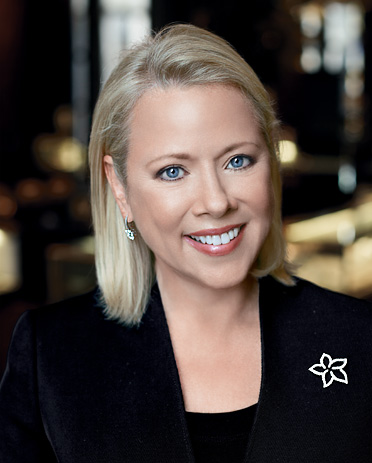
Beth Canavan


Tiffany & Co. said Wednesday that it is shifting and expanding responsibilities for two executive vice presidents, Beth Canavan and Frederic Cumenal.

Cumenal, 53, joined the international luxury jewelry retailer in March 2011 from the LVMH Group. He has been responsible for Tiffany's businesses in Asia, Japan, Europe and Emerging Markets. Effective immediately, Cumenal will expand his role to assume responsibility for all of Tiffany's worldwide sales activities.

Canavan, 58, joined Tiffany in 1987 and through progressively greater responsibilities has headed the Americas region in recent years. She will now report to Cumenal who reports to Michael J. Kowalski, Tiffany's chairman and chief executive officer.