Asteria Colored Diamonds

Asteria Colored Diamonds

TechForm

TechForm Platinum Jewelry Casting

Leibish & Co

Showing posts with label jewelry retail. Show all posts

Friday, August 11, 2017

Mayors Jewelers To Be Sold To British Holding Company

Birks Yorkdale store in North York, Ontario, Canada

In a multi-tiered deal Canadian jeweler, Birks Group, has agreed to sell its U.S.-based subsidiary, Mayors Jewelers, to British holding company, Aurum, in a transaction valued at $104.6 million.

As part of the transaction Birks entered into a five-year distribution agreement with Aurum to sell Birks fine jewelry in the U.K. through Aurum-owned retailers, Mappin & Webb, Goldsmiths, and on its e-commerce sites. In addition, the Birks collections will continue to be sold in the United States through Mayors’ stores.

“The agreement is an important achievement in the company’s strategy to develop the Birks brand into a global luxury brand,” Birks said in a statement.

The transaction, subject to specified closing conditions and purchase price adjustments, is expected to close in the fall of 2017.

Birks is a Montreal-based designer and manufacturer of jewelry that it retails (along with timepieces and gifts) through approximately 30 luxury jewelry stores in Canada under the Birks and Brinkhaus brands, and through a wholesale network. It also owns the U.S. luxury jewelry retail chain, Mayors Jewelers, which has approximately 17 stores in Florida and Georgia.

Aurum Holdings is the largest prestige luxury jewelers and timepieces retailer in the U.K. with approximately 140 stores and online retail sites. Its portfolio includes Watches of Switzerland, Goldsmiths, Mappin & Webb, Watchshop, The Watch Hut and The Watch Lab.

Birks in a statement said proceeds from the transaction will be used by to continue its “strategic growth initiatives,” specifically to invest in its Canadian stores and new store concepts, as well as in its whole activities and e-commerce, as part of the “company’s omni-channel plan.” Transaction proceeds will also be used to pay down outstanding debt under the company’s senior secured credit facilities that include term debt and working capital debt associated with Mayors.

“This transaction is a significant step in our efforts to strengthen our balance sheet to better position the company for growth as well as long-term shareholder value,” Jean-Christophe Bédos, president and CEO of Birks Group, said in a statement. “We believe that monetizing the value of Mayors gives us the ability to execute our strategic vision of investing in the Birks brand together with the retailing of internationally renowned jewelry and timepiece brands in Canada, thus transforming Birks into a global, omni-channel business.”

He added, “This transaction with Aurum also opens the doors to the U.K. market for our jewelry collections and we are extremely proud to join such a prestigious network as Aurum’s under the Mappin & Webb and Goldsmiths banners.”

Brian Duffy, president of Aurum, said in a statement the purchase of Mayors works within the British company’s plan “to be an important part of the Swiss watch market in the USA.” The company recently announced that it will open a flagship Watches of Switzerland store in the new Hudson Yards development in New York.

“We have admired Mayors for some time and see a great deal of similarities with how we operate our business in the U.K. Mayors,” he said.

Please join me on the Jewelry News Network Facebook Page, on Twitter @JewelryNewsNet, the Forbes website and on Instagram @JewelryNewsNetwork

Friday, February 17, 2017

Investor Group Completes $520 million Acquisition of Blue Nile


An investor group comprised of Bain Capital Private Equity, Bow Street and Adama Partners completed the acquisition of online diamond and jewelry retailer Blue Nile Friday, paying $40.75 per share in cash. A Securities and Exchange Commission document said the total amount paid for the Seattle-based company was $520 million.

The transaction was first announced on Nov. 7, 2016, and was approved by Blue Nile's shareholders on February 2. Trading in Blue Nile’s common stock on NASDAQ will end February 21.

“Blue Nile has disrupted and transformed the way consumers shop for and purchase diamonds and fine jewelry by creating price transparency while simultaneously providing value to suppliers,” said Blue Nile Chairman, CEO and President Harvey Kanter. “As we enter the next phase of growth, Blue Nile will continue to expand our vision and focus on putting the customer first by reaching them the way they prefer to shop whether it's a computer, mobile device, or in one of our Webrooms.”

Blue Nile was founded in 1999 by Mark Vadon after he had a less than satisfying experience shopping for a diamond engagement ring through traditional retail routes.

The company was created during the infancy of the Web with the premise that choosing an engagement ring can be a simple process and can be done online. Education and disclosure helped consumers make informed decisions when choosing a diamond engagement ring.

Within 10 years it became one of the largest diamond and diamond engagement ring retailers in the U.S. and one of the early high-growth eCommerce darlings.

The company has an inventory of more than 200,000 diamonds with grading reports from the Gemological Institute of America or the American Gem Society. They can be paired with more than 200 settings. The overall result is that, according to company officials, Blue Nile provides more options and sells their jewels for less than traditional retail jewelers.

Since its founding the company says it has served more than 1.7 million customers and sold more than 1 million engagement rings and wedding bands, combined.

However, 18 years later Vadon is no longer with the company, and more recently it is showing signs that its robust growth in the U.S. is waning (The company sales are growing at a strong pace at its two international hubs in Europe and China). On the same day the acquisition was announced, Blue Nile released its third-quarter earnings report, which showed a year-over-year net sales decrease of 4.3 percent to $105.1 million for the period ended Oct. 2, 2016.

However, in a statement the new investors believe there is still room for growth. 

“Blue Nile is a unique business with a strong platform in an industry that is rapidly evolving and migrating online," said Ryan Cotton, a managing director at Bain Capital Private Equity.  "We are excited to … help Blue Nile continue to lead the transformation of the customer purchase experience in engagement rings and fine jewelry.”

In an October interview, Katner told me that he too believes there is plenty of room to diversify and grow in the U.S. and abroad. In the U.S., while Blue Nile is by far the largest Internet diamond jewelry retailer in the U.S. (and the world) with 50 percent of the market, he believes it has only 5 percent of the overall jewelry market. 

To capture more market share, Katner said the company is working to enhance their mobile capabilities, reach consumers through retail outlets, known as Webrooms, and enhance how it digitally displays their products. 

Blue Nile Webroom Roosevelt Field Mall

“Today’s consumer or the millennial consumer really requires choice,” he said in October. “The way we look at our business, it is no longer an eCommerce business or an Omni-channel business. It’s a business about commerce,” he said in October. “We believe that as we continue to engage the millennial customer, we can get more people to have the trust and confidence, and understand all of the benefits of buying from someone like Blue Nile online. The Webroom is an example of that. Enhancements to the phone or tablet or PC, which is ultimately the digital experience, are examples of that. Those are all important elements that actually accelerate our business.”

BofA Merrill Lynch served as exclusive financial advisor to Blue Nile, and Wilson Sonsini Goodrich & Rosati served as its legal advisor. Goldman Sachs & Co provided debt for the transaction, and Kirkland & Ellis LLP served as legal advisor to the Investor Group. 

Please join me on the Jewelry News Network Facebook Page, on Twitter @JewelryNewsNet, the Forbes website and on Instagram @JewelryNewsNetwork

Monday, November 7, 2016

Investor Group To Acquire Blue Nile And Take It Private as Q3 Sales Drop 4.3%


In a Monday morning shocker, online jeweler Blue Nile said Monday that it has entered into an agreement to be acquired by an investor group led by Bain Capital Private Equity and Bow Street LLC. The all-cash deal is valued at $500 million. 

the investor group will acquire 100 percent of the outstanding shares of Blue Nile common stock. Blue Nile stockholders will receive $40.75 in cash per share, representing a premium of approximately 34 percent over Blue Nile's closing price on November 4.

An interesting tidbit from a personal perspective is that I was able to view the Blue Nile Fulfillment Center operation and recently wrote about it for Forbes.com. Was I used to help finalize the deal?

The acquisition deal, which requires customary closing conditions, including the approval of Blue Nile's stockholders and regulatory approvals, is expected to close in the first calendar quarter of 2017, the companies said in a joint statement.

“Since its inception, Blue Nile's guiding principle has been to provide value to its customers, suppliers and shareholders and this transaction provides tremendous value to all,” Harvey Kanter, Blue Nile chairman, CEO and president, said in the statement. “Blue Nile will continue its innovative drive that has disrupted the diamond industry and made us the smartest, easiest, and most pressure-free way for consumers to buy a diamond.”

Ryan Cotton, managing director at Bain Capital Private Equity added, “This is an opportunity to acquire a true disruptor in a fundamentally attractive and growing segment of the diamond industry…. We believe the company will continue to grow as educated consumers continue to seek easy and convenient shopping experiences that deliver transparent pricing and enhanced value.”

Howard Shainker, managing partner at Bow Street said, “Blue Nile is a unique business with a strong platform in an industry that is rapidly evolving and migrating online. We are excited to work alongside Blue Nile management and Bain Capital to execute on the company's strategy.”

Blue Nile's board of directors unanimously approved the deal and recommended that stockholders vote their shares in favor of the transaction. Blue Nile will become a privately-held company and continue to be headquartered in Seattle. 

Blue Nile also may solicit alternative acquisition proposals from third parties during a 30-day “go-shop” period, following the date of execution of the merger agreement.

The announcement came at the same time Blue Nile released its third quarter earnings report, which showed a year-over-year net sales decline of 4.3 percent to $105.1 million for the period ended October 2. The report was issued without comment and a conference call scheduled for Monday was abruptly canceled. 

Operating income for the quarter totaled $1.8 million, representing an operating margin of 1.7 percent of net sales, compared to $3 million in operating income and 2.8 percent operating margin for the third quarter 2015. Net income totaled $1.3 million, or $0.11 per diluted share versus $2 million, or $0.17 per diluted share for the third quarter 2015.

Non-GAAP adjusted EBITDA for the quarter totaled $4.2 million compared to $5.3 million for the third quarter 2015. 

Other third quarter highlights include the following:

* U.S. engagement net sales decreased 8.5 percent to $59.5 million. 

* U.S. non-engagement net sales increased 1.2 percent to $25.3 million. 

* International net sales increased 1.8 percent to $20.3 million. Excluding the impact from changes in foreign exchange rates, international net sales increased 4.2 percent. 

* Gross profit totaled $20.6 million. As a percent of net sales, gross profit was 19.6 percent compared to 19.3 percent for the third quarter 2015. 

* Selling, general and administrative expenses were $18.8 million, compared to $18.2 million in the third quarter 2015. This included stock-based compensation expense of $1 million for the third quarter 2016 and $1.3 million for the third quarter  2015. 

* At the end of the third quarter, cash and cash equivalents totaled $40.6 million.

As far as the acquisition, BofA Merrill Lynch is serving as exclusive financial advisor to Blue Nile, and Wilson Sonsini Goodrich & Rosati is serving as its legal advisor. Goldman Sachs & Co is providing debt for the transaction, and Kirkland & Ellis LLP is serving as legal advisor to the Investor Group. 

Please join me on the Jewelry News Network Facebook Page, on Twitter @JewelryNewsNet, the Forbes website and on Instagram @JewelryNewsNetwork

Tuesday, September 13, 2016

Tiffany Names Mark Erceg As CFO


Tiffany & Co. appointed Mark Erceg as its executive vice president and chief financial officer, responsible for the company's worldwide financial, indirect procurement and information technology functions.

Erceg, 47, will be based in New York and will report to Frederic Cumenal, Tiffany CEO. His appointment will become effective on October 18. He replaces Tiffany's former chief financial officer who left the Company in May to pursue another position with a different company.

Erceg was previously employed at Canadian Pacific Railway Ltd., where he has served as executive VP and CFO since May 2015. From 2010 - 2015, he was the CFO for Masonite International Corp. He began his career at Procter & Gamble in 1992 where, over 18 year period, he served in positions of increasing responsibility in finance, market strategy, customer response, general management and global investor relations.

"Mark brings an operational process orientation and a broad financial, international and consumer brands background to Tiffany," Cumenal said in a statement issued Tuesday. "As the new leader of our multi-talented finance, procurement and information technology organizations, his varied experience and global perspective will be important as we continue to work toward strengthening Tiffany's luxury brand position around the world and enhancing our profitability and productivity." 

Please join me on the Jewelry News Network Facebook Page, on Twitter @JewelryNewsNet, the Forbes website and on Instagram @JewelryNewsNetwork

Monday, September 14, 2015

The ‘Esperanza’ Diamond Story

The 8.52-carat Esperanza diamond as it is being cut into a rare Triolette shape. Photo credit: Gretchen Friedrich 

Gretchen Friedrich Jewelry News Network’s social media manager, spent two days watching a rare 8.52-carat diamond found in an Arkansas state park, as it was being cut and polished at Stanley Jewelers, North Little Rock, Ark. This is her first-hand account. 

By Gretchen Friedrich

I fully buy into this song lyric, “Diamonds are a girl's best friend.” For Bobbie (Brooke) Oskarson, this famous line rings very true.

The story begins in June with the Colorado resident heading south to Arkansas with her boyfriend, Travis, at the wheel. They are traveling to see a family friend of his in the Northeast corner of the state. Their vacation budget was limited, and fun was concentrated around inexpensive activities.

Travis is a mining enthusiast. It was his idea to visit the Crater of Diamonds State Park in Murfreesboro, Ark. to dig in the dirt.

Diamond cutter Mike Botha working on the Esperanza,  Photo credit: Gretchen Friedrich 

They paid the state park fee of $8, received the customary introduction to the park and education on diamonds. This is likely the only open-to-the-public diamond mine in the world. It is actually a field, not a dark, cavernous hole in the earth. The bad part about the mine not being a cave is that it is hot in the summer months.

Twenty minutes into their digging, Oskarson is searching for shade. As she makes her way to an area of the park near a tree, she noticed a clear stone. Oskarson had never seen a rough diamond before, so she stuck it in her pocket thinking it was quartz—another mineral abundant at the site, along with calcite, garnet, and a plethora of other semi-precious stones.

Photo credit: Gretchen Friedrich

She hands the stone to Travis, regroups after her break in the shade and keeps digging. Hours later they take their findings to the state park rangers for inspection. The ranger on duty takes the stone and excuses herself. She comes back several times telling the couple to please wait. Needless to say, their patience paid off.

The ranger finally returns to congratulate Oskarson on her find. It was indeed a diamond. A large diamond weighing 8.52 carats. Oskarson’s initial reaction was a combination of colorful phrases not suitable for work. She promptly apologized to the people gathered around her and immediately went into shock.

Fast forward to September, 2015. Oskarson has assembled a crew of professionals to help auction the Esperanza diamond (Spanish for Hope), named for Oskarson’s niece.

Bobbie Oskarson with the Esperanza diamond. Photo credit: Gretchen Friedrich

Oskarson is auctioning the diamond (which will be turned into a jewel) in December to fund her dream of becoming a homeowner. She works as an administrative professional for a non-profit in Denver. They help mentally disadvantaged adults find caring homes. Her pay is small compared to the stacks of good deeds she does on a daily basis.

Oskarson’s new diamond family consists of Neil Beaty, certified gemologist and appraiser in Denver, his wife Sheri Allen, Mike and Evert Botha, a father and son team (respectively) who own Embee Diamonds, Prince Albert, Canada, and the Stanley family, owners of Stanley Jewelers, North Little Rock, Ark. The one thing they have in common is they are members of the American Gem Society, a jewelry trade association.

This is where the fun begins. Neil and Sheri Beaty have taken Oskarson’s dream to heart and are helping to maximize her “big bag of money” as Neil states, at the end of this process. Neil taps into his AGS connections to continue this American story.

Mike Botha gives someone an up close look at the the diamond.  Photo credit: Gretchen Friedrich

Neil reaches out to the Bothas, who are willing to temporarily relocate to Arkansas with all their cutting gear in tow. Mike is an expert diamond cutter with more than 20 years of experience. He likes to tell jokes while delicately shaping a priceless gem. I asked him why he chose diamond cutting. His response: “Because accounting is boring.” He says this while dressed like every accountant I know.

The father and son are camped in the showroom at Stanley Jewelers with the public invited to view the process. This family business is in its third generation, and exhibits an extensive knowledge of jewelry with a flair for making everyone feel welcome.

Loyd Stanley, representing the jeweler’s second generation, can be found smiling at everyone, coffee cup in hand, telling stories of his years in the business. Laura Stanley, Loyd’s daughter is shifting her time between design and operations. Her sister Caroline Stanley flew in from California to be part of the show. Caroline owns Red Jewel, jewelry industry marketing firm. Their brother Steve is also on board, occupied constantly with the stream of clients walking through the doors.

Shirley Strawn, the woman who discovered the 3.09-carat Strawn-Wagner diamond in 1990 at Crater of Diamonds State Park with two park officials. Photo credit: Gretchen Friedrich

It's a packed house and a bevy of activity. Media from all outlets, plus curious customers, and the park rangers from the Crater of Diamonds make for a constant buzz. There was even a diamond reunion on September 10. The Crater of Diamonds park rangers arrived with some of the prize winning diamonds found at the park.

Shirley Strawn, a fourth generation diamond digger, was there with her Strawn-Wagner diamond, a D color Internally Flawless gem she had mounted into a ring. She told me that day, “Every diamond has its own energy and its own place.” It’s a perfect summary for my experience with Esperanza.

Oskarson, who had only been in a jewelry store once before, found her destiny in Esperanza and set off a domino effect of events. The culmination resulted in one of the cleanest diamonds Mike Botha said he’s ever seen in his years as a diamond cutter. The energy that all the players brought to the table was one of excitement and camaraderie. Information exchange was constant as were laughs and stories.

Another look at the 8.52-carat Esperanza diamond as it is being cut into a rare Triolette shape. Photo credit: Gretchen Friedrich 

When my time to depart arrived I was sent off with hugs, an invitation to Denver, a coffee mug identical to the one Loyd Stanley uses and a treasure trove of education, memories and new friends. Esperanza is well on her way to becoming a one-of-a-kind gem.

Please join me on the Jewelry News Network Facebook Page, on Twitter @JewelryNewsNet and on the Forbes website

Tuesday, September 8, 2015

Bringing The Success Of Bond Street, Hatton Garden and the Diamond District, Online

Bond Street, London Photo credit: Nando Machado / Shutterstock.com

By Chris Benham, co-founder and director of Inspired Jewellery Ltd., and Angelka Vegar, marketing coordinator of Inspired Jewellery Ltd.

Why do jewelry stores cluster together in the same place? Go to Bond Street in London, and you’ll find the likes of Cartier, De Beers, and Tiffany & Co., all vying for your attention. Head down to Hatton Garden in London and you’ll find a lineup of jewelry stores complete with an eager jewelry salesperson trying to entice you in. However, Bond Street and Hatton Garden, as well as the Diamond District in New York, are more than a geographic location—they are in fact brands.

The reason jewelry stores set up in these areas is that when competing or complementary businesses band together under a central brand, whether that be Bond Street, Hatton Garden, or the Diamond District, everyone benefits from increased sales. Buyers flock towards the central brand to browse and buy their dream piece of jewelry. The association with a globally recognized central brand is not at the expense of the individual brands that are connected to it. Far from it. The value of each brand increases by way of positioning themselves within an esteemed group and ensuring everyone knows where they are situated.

Hatton Garden, London Photo Credit: Nando Machado / Shutterstock.com

In the online retail world, standing out from the crowd can be even more challenging as there’s no inherent ‘foot traffic’ to tap into when companies launch their online store. They are mostly at the mercy of Google, which actually isn’t that good for product shopping. This is why bringing central brands online is trending. There are of course lots of online directories that tap into the online “foot traffic” of a destination location such as Hatton Garden but few go deeper and offer customers the ability to search products across all stores. Amazon is good for searching for products but brands lose their identity on there so many luxury brands tend to shy away.

So what are progressive jewelers doing to ensure they are ready to take advantage of this trend? They are becoming experts in their chosen niche. Niche experts, such as the Fair Trade Jewellery Company in Toronto and their passionate, considered and in depth knowledge of the stakeholders in their supply chain, allow them to stand out from the crowd while at the same time connecting with the collective Fair Trade movement.

By establishing a niche, jewelry retailers are maintaining margins in an online world where consumers have access to products from all over the world. In addition, operating within a niche provides an opportunity for jewelers to grow their audience. Where once a retailer was limited by their geographical boundaries and lack in numbers to service a niche, now, by adopting a multi-channel strategy which includes physical retail and eCommerce, they can tap into already-established communities of customers around the globe who are passionate about what they are selling. And by joining collectives, jewelers can effectively sell to the converted.


The online retail world is set to increasingly mirror the physical one, with collective brands surfacing in ever increasing numbers. Before your trip to New York you’ll be jumping online to find products from your favorite brands, or discover new brands, before even setting foot in The Big Apple. Or maybe you don’t have the luxury of a trip to New York and that’s okay too, because in the future of retail, you can bring the Diamond District to your very own living room.

Jewelry News Network guest columnist, Chris Benham, is co-founder and director of Inspired Jewellery Ltd., Wellington, New Zealand, a global creative studio for specialist jewelry design.  

Please join me on the Jewelry News Network Facebook Page, on Twitter @JewelryNewsNet and on the Forbes website

Thursday, September 3, 2015

Wallace Chan, Chow Tai Fook Unveil Sparkling Necklace From 507-Carat Diamond

"A Heritage in Bloom"

Hong Kong-based jewelry retailer, Chow Tai Fook commissioned world-renowned jewelry artist Wallace Chan to create a jewel from diamonds cut from the Cullinan Heritage, an exceptionally rare 507.55 carat Type IIa rough diamond. The result is “A Heritage in Bloom,” a necklace made of green and white jade, colored diamonds and 24 D-color, internally flawless diamonds from the original rough.

Integration of jade and diamonds–including the centerpiece of the necklace: the 104-carat, D color, internally flawless, brilliant round Forevermark diamond

The centerpiece of the necklace is a 104-carat, D color, internally flawless, brilliant round diamond with the highest possible cut grade of “3-Excellent,” according to the Chow Tai Fook, making it one of the largest diamonds ever with these characteristics. Forevermark, a De Beers Diamond brand, said Monday the diamond was one of theirs.  

Butterflies represent eternal love

The diamond necklace unites an entire family of diamonds cut from the same rough stone within a single piece of jewelry, “an artistic decision unheard of in a contemporary piece,” according to the company. It also brings together thousands of white diamonds and hundreds of pink diamonds, totaling 383.4 carats, as well as more than one hundred pieces of green jadeite and mutton fat white jade. The ornate necklace includes figures of a bat (for good luck) and butterflies (for eternal love).

If that’s not enough, the necklace is created with a modular design that can be worn in 27 different ways. The company says this is an example of the sophistication of Chan’s “design and exquisite composition” for the necklace

The bat represents good fortune

It required more than 47,000 hours from craftsmen who specialize in various areas of jewelry making. 

Chow Tai Fook, one of the world’s largest retail jewelers by market capitalization, said it paid $35.3 million for the 507-carat, Type IIa (almost or entirely devoid of impurities) rough diamond in 2010. The company then spent three years cutting and polishing the diamond.

Mutton fat white jade beads

“Today we complete a journey we began five years ago, and we could not be more proud of the exceptional and historic creation that has emerged," Dr. Henry Cheng, chairman of Chow Tai Fook Jewellery Group Limited, said Thursday while unveiling the diamond in Hong Kong. "Continuing the Cullinan legend, the world-renowned master jewelry artist Wallace Chan has brought the Cullinan diamonds to life.” 

The back of the necklace’s centerpiece

Chan is recognized by many as the greatest living Asian jewelry artist. He founded his own gemstone carving workshop when he was 17 and in 1987 he invented the “Wallace Cut,” an illusionary carving technique that transcends dimensions. He was the first Chinese jewelry artist ever invited to exhibit and deliver speeches at the Gemological Institute of America headquarters. In 2012 and 2014, he was the first and only Asian artist ever invited to exhibit at the prestigious Biennale des Antiquaires in Paris.

Chow Tai Fook operates approximately 2,260 Chow Tai Fook and Hearts On Fire standalone shops spanning 500 cities in Greater China, Singapore, Malaysia, South Korea and the United States.

Please join me on the Jewelry News Network Facebook Page, on Twitter @JewelryNewsNet and on the Forbes website.

Thursday, June 11, 2015

Buccellati Unveils Salon in West Palm Beach


By Gretchen Friedrich
Jewelry News Network Social Media Manager

Favoloso is the Italian word for fabulous. It is certainly an appropriate adjective for describing all things Buccellati. From the world’s most expensive tech accessories, to the extensive history of craftsmanship, Buccellati brings a signature level of quality and creativity in all its pieces.

That attention to detail is conveyed in the new location in the Neiman Marcus store in West Palm Beach, Fla., unveiled Wednesday. The salon’s design and appointments are a reflection of the new global identity by Buccellati worldwide, unveiled in March in its new New York boutique. The salon features its signature Alcantara beige throughout the space, complimented by rich wood display cases and neutral furnishings. 

In 2014, the design house launched a rebranding effort while simultaneously bringing on its first female designer, Lucrezia Buccellati. She continues the family tradition of two generations working as the design center of the luxury jewelry house. She and her father, Andrea, are combining traditional Buccellati craftsmanship with modern design. 

Please join me on the Jewelry News Network Facebook Page, on Twitter @JewelryNewsNet and on the Forbes website.

Sunday, February 8, 2015

Graff Unveils Flagship Boutique in Hong Kong


The slowdown in luxury spending in China and Asia hasn’t had an effect on Graff Diamonds. Or so it seems as the luxury jeweler opened its flagship Hong Kong store inside the St George’s Building, in the city’s Central district. The London-based company has branded boutiques in seven Asian cities: Hangzhou, Hong Kong, Macau, Shanghai, Tokyo and Taipei; and a total of 18 retail spaces in the region. 

Designed by architect Peter Marino, the store is in the familiar style of Graff boutiques around the world with its modern and contemporary aesthetic incorporating bespoke fixtures and fittings. Walls are clad in paper parchments, mica and painted bamboo; while chairs are wrapped in woven and plush knitted fabrics.


Each area of the store has a distinctive design and color palette with warm gold and bronze tones in contrast with icy green and grey hues.

Jewelry showcases are located on interior walls creating maximum impact for displaying jewels and watches. A chandelier comprising spheres of green, gold and silver serves as a centerpiece suspended from rigid silver rods, illuminating the diamonds below.


An artwork by American artist, Rachel Lee Hovnanian, is the central element in the VIP room.

Please join me on the Jewelry News Network Facebook Page, on Twitter @JewelryNewsNet and on the Forbes website.

Thursday, November 6, 2014

The internet's Impact on the ‘Makers’ and ‘Takers’ in the Global Jewelry Industry


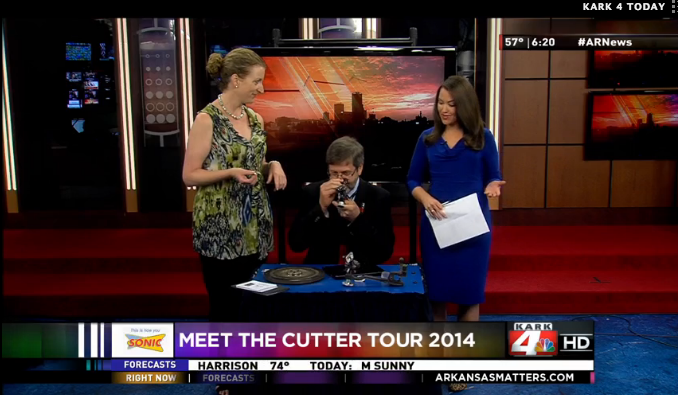
Laura Stanley of Stanley Jewelers Gemologist, Little Rock, Ark., hosted Master Diamond Cutter Mike Botha of Embee Diamonds to teach consumers about the diamond cutting process. The event was televised on a local news station.
This is the first in a series of articles by Chris Benham, co-founder and director of Inspired Jewellery Ltd., Wellington, New Zealand, a global creative studio for specialist jewelry design.  

The internet has had a hugely disruptive effect on the jewelry industry in recent years, as it has with most industries. Our rapidly shrinking world has led to an increase in transparency, access and an explosion of product choice. The side effect of this is that many traditional jewelry businesses throughout the value chain have seen their margins erode.

A lot of traditional "taker" businesses that, in the past, have had to accept the prices of their suppliers, and who have historically been able to set their own prices with little challenge from their end customers, now cannot. These taker businesses range from local diamond wholesalers to Mom-and-Pop jewelry retailers that have been around for generations. Customers can quickly jump on the internet to compare prices, so these businesses have had to find ways to survive by adding value to their end customers. 

The companies that have thrived in recent years are the "makers" - the ones that have taken tradition and redefined it. There are many great examples of companies that have built brands that focus on design, craftsmanship, great personal service and trust. The byproduct of doing the tangibles well are the intangibles that form the basis of their innovation and ultimately the intellectual property that other companies struggle to understand or replicate.

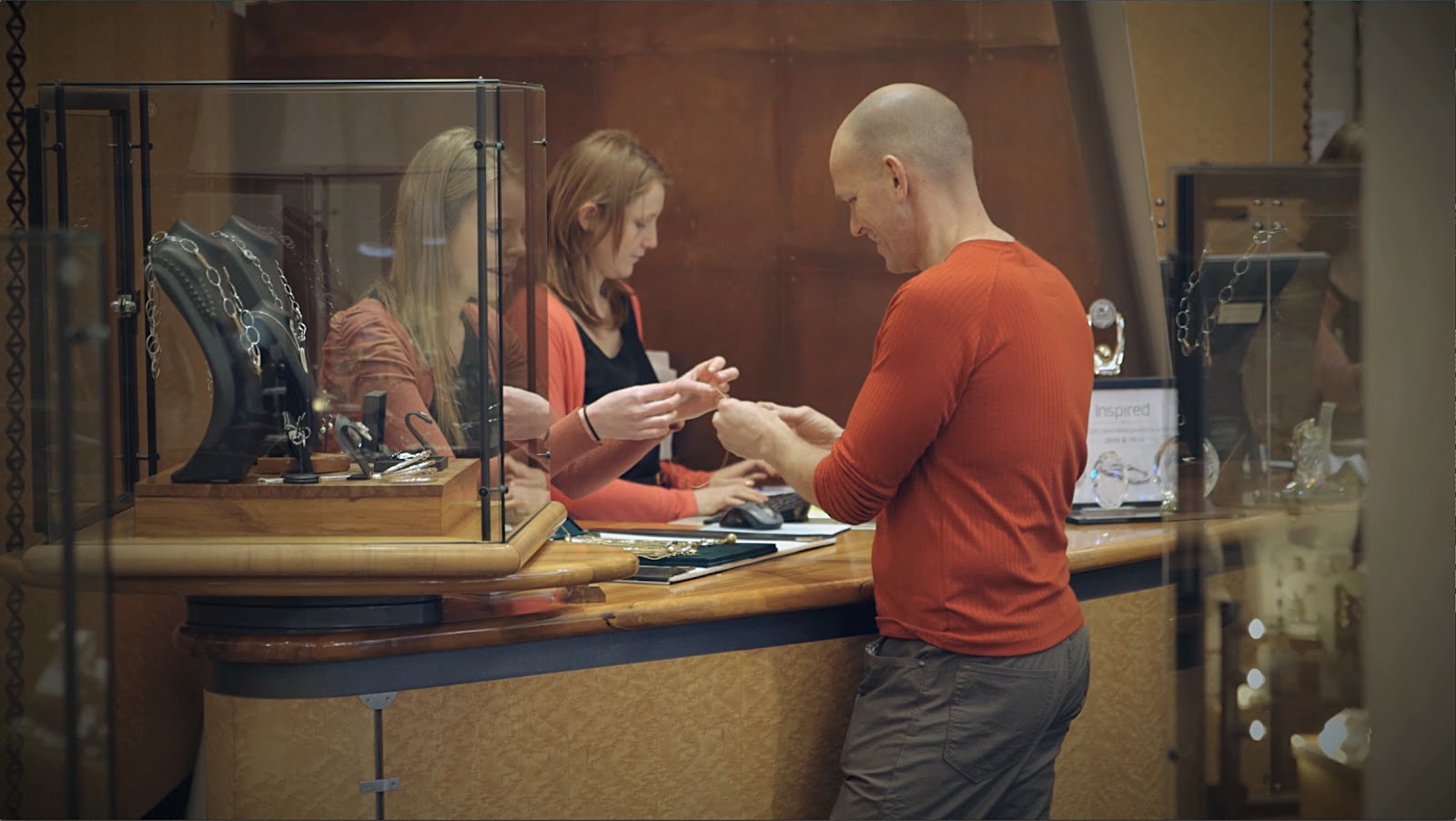
Customer picking up his purchase at The Village Goldsmith, Wellington NZ. 

The internet breeds monopolies and no more so than in the jewelry industry. The top tier diamond companies are becoming more and more dominant by the day, helped by natural economies of scale and their purchasing power. Much of the reason for this is that ‘Mom and Pop’ retailers from the US to New Zealand have the same access to diamond inventory lists as do the major online global jewelry retailers. Consumers are able to access diamond pricing information and descriptions instantaneously, make comparisons and choices at the touch of a button, and this has led to the erosion of traditional margins for retailers. Diamond companies’ margins are also getting tighter as they fight to remain competitive, ensuring that they need to innovate to stay relevant.

Why is this good for the end customer? Well, it forces companies throughout the whole value chain in the jewelry industry to genuinely look at clever ways to create better products and experiences for their customers.


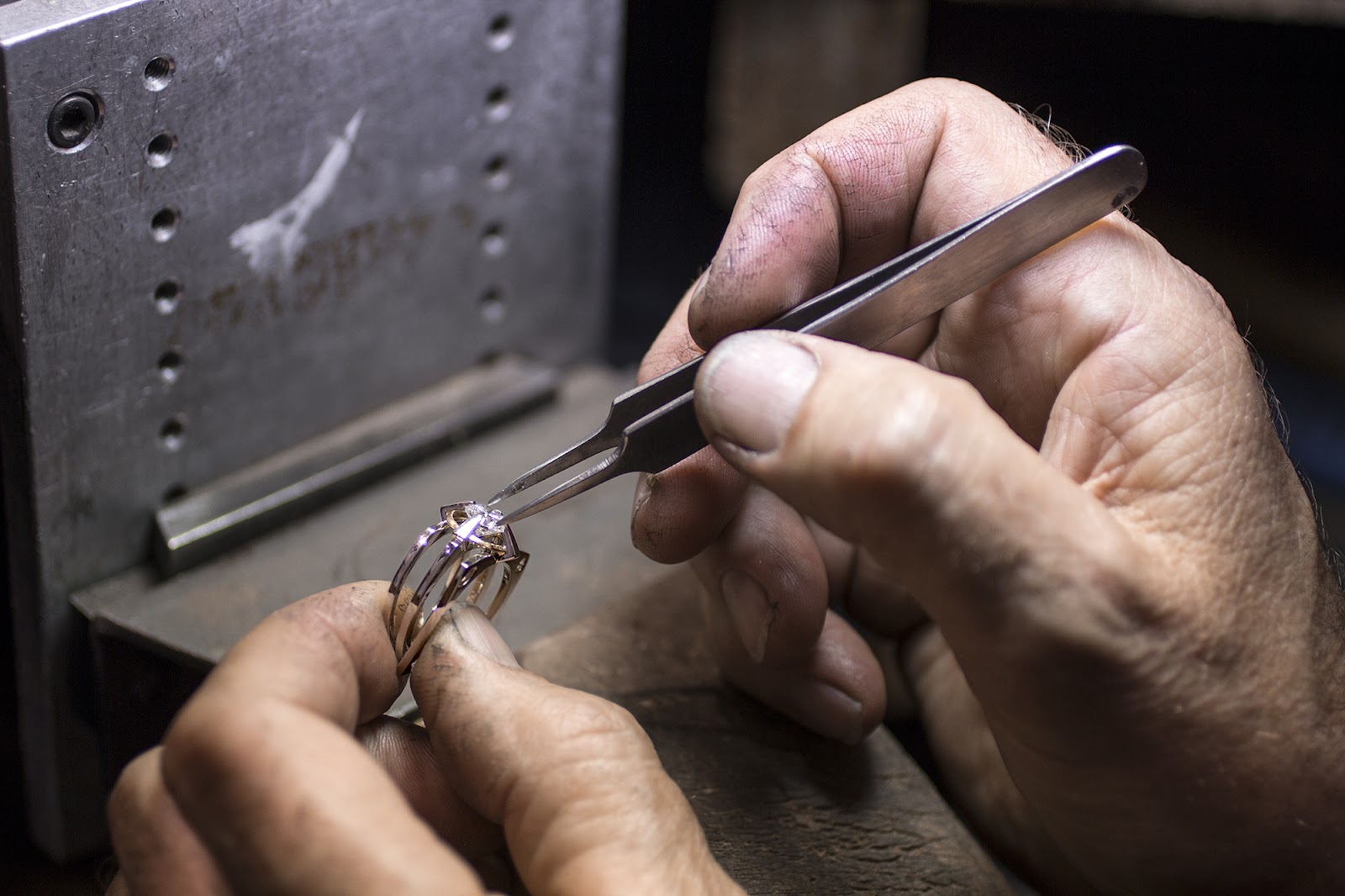
A master jeweler at Inspired Jewellery sets a diamond on a ring. 

Retailers big and small that continue to focus their efforts around the needs of their customers are seeing strong growth. In a recent report big retailers like Nordstrom attribute customer service as central to their strategy and recent growth. They are using different store types and brands to appeal to different customer profiles and age groups. They’ve recognized the need to connect with the younger generation as they will be tomorrow’s customer and are using an omni-channel strategy to support this. Burberry is another luxury brand that is going to great lengths to connect the retail store experience with the online experience.

Recent research conducted by Bain and Co. stated that when consumers were selecting which jewelry store to buy from in Western markets they valued quality service over all other factors. 

A local US retailer that has recognized this is Stanley Jewelers Gemologist in Little Rock Arkansas. Vice President Laura Stanley recently hosted Master Diamond Cutter Mike Botha of Embee Diamonds (see top photo). The aim of the “Southern Stars: Meet the Cutter” tour was to teach consumers about the diamond cutting process so that they are able to make more informed decisions. Laura Stanley said that the theme of the event was to get to know your jeweler better. The event provided Stanley’s customers with an authentic experience of what goes into cutting a diamond - a craft that is not often showcased to consumers. 

If “price makers” want to retain that position they must continually innovate and provide more intangibles for their customers to prove that the price they set is worth paying.

Please join me on the Jewelry News Network Facebook Page, on Twitter @JewelryNewsNet and on the Forbes website.

Tuesday, October 14, 2014

Signet Jewelers CEO Mike Barnes Resigns; Replaced by Mark Light

Mike Barnes

Signet Jewelers Ltd. said Tuesday that Michael Barnes will resign from his position as chief executive officer and from Signet's board of directors, effective October 31, in order to be closer to his family in Dallas.

Mark Light, Signet's president and chief operating officer, has been named to succeed Barnes as CEO and take a seat on the board.

Signet said it is also reaffirming its financial guidance initiated in its second quarter earnings release on August 28.

Barnes joined Signet in December 2010 and became its CEO in January 2011, replacing Terry Burman, the company’s longtime CEO. Most recently he oversaw the $1.46 billion acquisition of Dallas-based Zale Corp., its largest US competitor, in May, making Signet the largest specialty jewelry retailer in the US, UK and Canada with approximately 3,500 retail outlets.

“Mike has been the leader of the Signet executive management team during a period of outstanding transformation and growth,” said Todd Stitzer, Signet chairman. “Since he joined Signet in 2010, Mike has been an instrumental part of Signet's success. He has played a critical role in Signet's recent acquisition of Zale Corp. and its continuing integration. He has also led the development of Signet's Vision 2020 Initiative for the future. We understand and respect his personal desire to relocate nearer to his family and pursue opportunities closer to his home in Dallas at this time.”

Signet is based in Bermuda and is listed on the NYSE. Its US subsidiary, Sterling Jewelers, with more than 1,400 stores in 50 states, is headquartered in Akron, Ohio. The company, in an SEC filing Tuesday, said it will pay Barnes accrued but unpaid benefits or obligations, his base salary for 12 additional months and an annual bonus at the end of the fiscal year.


Light has been with Signet for more than 30 years, with primary responsibility for the Sterling division, by far Sterling’s largest division, until the Zale Corp. acquisition.

“We are delighted to announce Mark’s promotion to chief executive officer of Signet,” Stitzer said. “Mark is an experienced, strategic leader who has been deeply involved in the company's Vision 2020 Strategy, the Zale acquisition and its ongoing integration. In addition he has a meticulous approach to operational details, and has been the main architect of our Sterling division's consistently profitable growth and has played a key role in defining and executing Signet's growth strategy. He has also been an advisor to our UK Managing Director since 2013 and became formally responsible for that business in mid-2014.”

Signet's Sterling division operates primarily under the brands of Kay Jewelers and Jared The Galleria Of Jewelry. Signet's UK division operates approximately 500 stores primarily under the name brands of H.Samuel and Ernest Jones. Signet's Zale division operates more than 1,600 locations in the US and Canada primarily under the name brands of Zales, People's, and Piercing Pagoda. The company also has online operations at www.kay.com, www.jared.com, www.hsamuel.co.uk, www.ernestjones.co.uk, www.zales.com, and www.peoplesjewellers.com.

Monday, July 21, 2014

Tiffany & Co. CEO Michael Kowalski to Retire; Frederic Cumenal Named as Successor

Michael J. Kowalski

Longtime Tiffany & Co. CEO, Michael J. Kowalski, will retire effective March 31, 2015, the luxury jewelry retailer announced Monday.Frederic Cumenal, Tiffany president, has been tapped to succeed him.

Kowalski, 62, joined Tiffany in 1983, became its in 1999 and assumed the role of chairman of the board in 2003. He will continue to serve on the board in the role of non-executive chairman following his retirement. 

“I am immensely satisfied by what we have accomplished at Tiffany over the past 30 years, and I am confident that the company is superbly positioned for the future,” Kowalski said in a statement. “Frederic Cumenal is ideally suited to succeed me as chief executive officer, and we will continue to work closely together to ensure a seamless transition.”

Cumenal, 54, was named Tiffany’s president in September 2013, with responsibilities for worldwide sales and distribution as well as design, merchandising and marketing functions. At that time he was also appointed to a newly created seat on the Tiffany’s board. Cumenal initially joined Tiffany in March 2011 as an executive vice president with responsibilities for sales and distribution. He will succeed Kowalski on April 1, 2015.


Frederic Cumenal

“This is an extraordinary company with a fantastic heritage and an exciting future,” Cumenal said. “I am deeply honored to be selected as its leader and look forward enthusiastically to capitalizing on the many opportunities ahead.”

Prior to joining Tiffany, Cumenal held senior leadership positions for 15 years in LVMH Group’s wine and spirits businesses, most recently as president and chief executive officer of Moët & Chandon, S.A. He previously served as CEO of Domaine Chandon, and was managing director of Moët Hennessy Europe.

Please join me on the Jewelry News Network Facebook Page, on Twitter @JewelryNewsNet and on the Forbes website.

Sunday, April 21, 2013

Another Wave of Innovation From Outside the Jewelry Industry with Consumer-Friendly Websites


The jewelry industry has an image problem. Younger consumers find the jewelry store environment intimidating. More importantly, these same consumers, who spend much of their time with digital media, find websites from retailers, designers and manufacturers equally imposing.

Innovation online has largely come from outside the industry, such as website Blue Nile. However, the Blue Nile model with its focus on jewelry and diamonds as a commodity seems to be losing ground as the digital landscape has again dramatically changed with the wide acceptance of social and mobile media.

To address this new reality, two websites (again founded by people outside the industry) have launched that are working to bridge the gap among e-commerce, social media and bricks-and-mortar retail: Adornia and Stone & Strand.


These well-branded projects have a lot in common. They are focused on delivering a quality experience by attempting to build a community of enthusiastic and engaged jewelry buyers. They both are using a curated approach to their business models. The founders of both sites are products of the Wharton School of the University of Pennsylvania. In addition, these founders also have a wealth of professional and personal experiences that have enhanced the vision of their projects.

Adornia co-founders Becca Aronson and Moran Amir met at Wharton and didn’t wait to leave the business school before starting their own company. Both are scheduled to graduate in May but launched Adornia in September 2012 out of their apartments. They plan to return to New York to set up a permanent home for their business. Aronson was the former Lucky accessories editor and Amir handled retail operations for Catherine Malandrino and Diesel. Their experiences are complementary with Aronson the creative person while Aronson handles much of the business. “She’s Photoshop and I’m PowerPoint,” Amir says.

The website sells affordable fine fashion jewelry at a price range from approximately $75 to $2,300. Their customer is very specific: fashion-forward, professional, urban women from the ages of 25 to 45 who have a strong sense of personal style. This site’s main customers are women who buy their own jewelry (the self-purchasing woman).

Aronson and Amir purchase all of the jewelry themselves. In addition to curating the pieces, they organize them in separate collections with names like “Heavy Metal,” “Deco After Dark” and “Darkest Jungle.” The idea is to make personal jewelry shopping easier for women who know their own style. While the site is geared for women, they say that this presentation also makes it easier for men and friends to purchase gifts. They also discuss fashion trends through their blog, “The United States of Adornia.”

The co-founders take their brand to the people, holding trunk shows from San Francisco to Shanghai, China. One of their plans is to do a cross country bus tour.

Meanwhile, Wharton grad Nadine McCarthy Kahane launched her website, Stone & Strand, April 18. A former strategy consultant, she has traveled extensively for work and pleasure and has lived in Singapore, London and Buenos Aires before settling in New York.

Instead of curating the jewelry collection like Adornia, Kahane is curating a group of jewelry designers. She opened the site with a group of 24 designers. The result is a broad jewelry collection that ranges in material from wood to high-karat gold and in price from $115 to well over $20,000. For now all of the designers reside in the U.S. (although several are from other countries) but Kahane said she will expand to include designers from around the world.

This is a site geared toward a clientele who love the search for original adornment almost as much as they love wearing the pieces. “People want things they can fall in love with,” Kahane says. It’s really nice to be able to tap into that passion.”

On this website, the focus is totally on designers. Their works and their stories are presented front and center. They provide access to designers’ studios through personal meetings and special events.

For Kahane the inspiration to start this site was personal. First, she discussed the difficulties of learning about jewelry on her own (such as style, materials and cost). Then she said she has two friends who are jewelry designers who were having difficulty finding an online home for their work.

“We in business are trained to spot opportunities and we feel jewelry is going through this transformation,” she said. “It’s been so conservative. A lot of the designers don’t sell online or they sell a very small portion of their collection online. We do see things changing quickly. We see people buying off Instagram these days. It’s all about access.”

Another thing both sites share is free shipping to U.S. and customer-friendly return policies. Of course both brands appear on all of the standard social media platforms.


Please join me on the Jewelry News Network Facebook Page, on Twitter @JewelryNewsNet and on the Forbes Website.